We use cookies to improve our website and measure our advertising. If you accept, analytics and advertising cookies are enabled; if you decline, only essential cookies are used. Cookie Policy
 AQUATANK
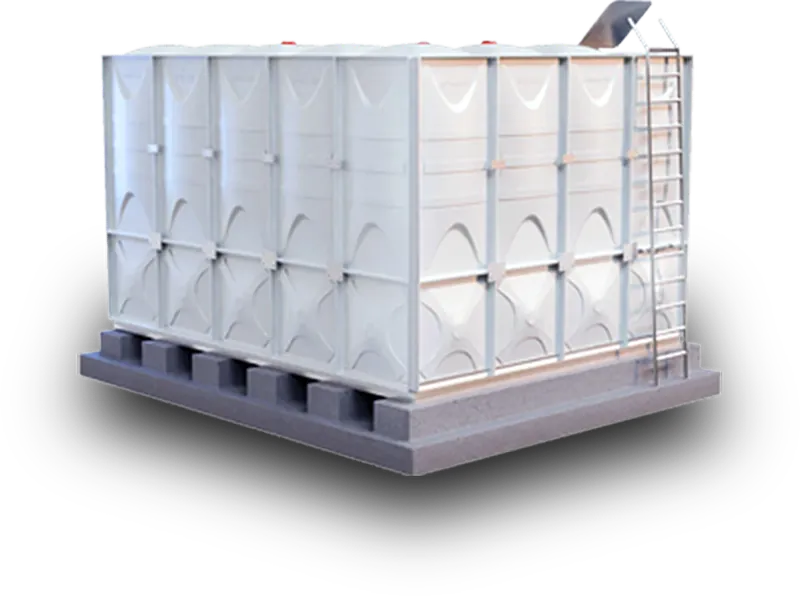
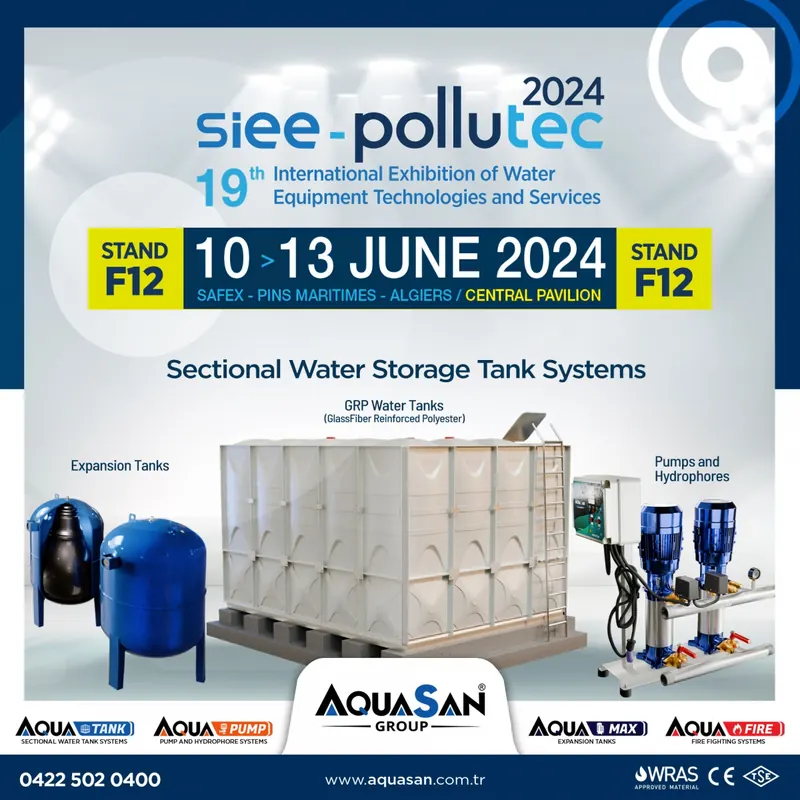
GRP, galvanized and stainless steel tanks are built from standard panels and bolted together on site in the required size and capacity. They are manufactured to national and international standards, certified by WRAS, CE, TSE and TSEK.
AQUATANK
Modular water tanks stand out with their easy installation, portability and long service life, while providing hygienic and safe water storage. Made from GRP (glass fibre reinforced composite), galvanized steel or stainless steel panels, these tanks are frequently preferred by businesses and individual users for ease of installation and maintenance. As Aquasan Group, we design and manufacture modular water tanks suited to every need.
Quality Materials: Our products are made from materials resistant to rust and external factors.
Flexible design: Our tanks can be custom-designed for different capacities and requirements.
Easy to install and transport: Thanks to the modular structure, they can be easily installed and moved.
Hygiene solutions: We use modern production technologies to store your water cleanly and safely.
Long Life: Thanks to their durable structure, you can use them safely for many years.
Experience: With years of accumulated expertise, we offer you the best solutions.
Customer-Focused Approach: We carefully analyze the needs of every customer and produce the most suitable solutions.
Quality Guarantee: All our products are manufactured in accordance with international quality standards.
Fast Delivery and Service: We respond to your needs quickly and effectively.
SECTIONAL WATER TANKS
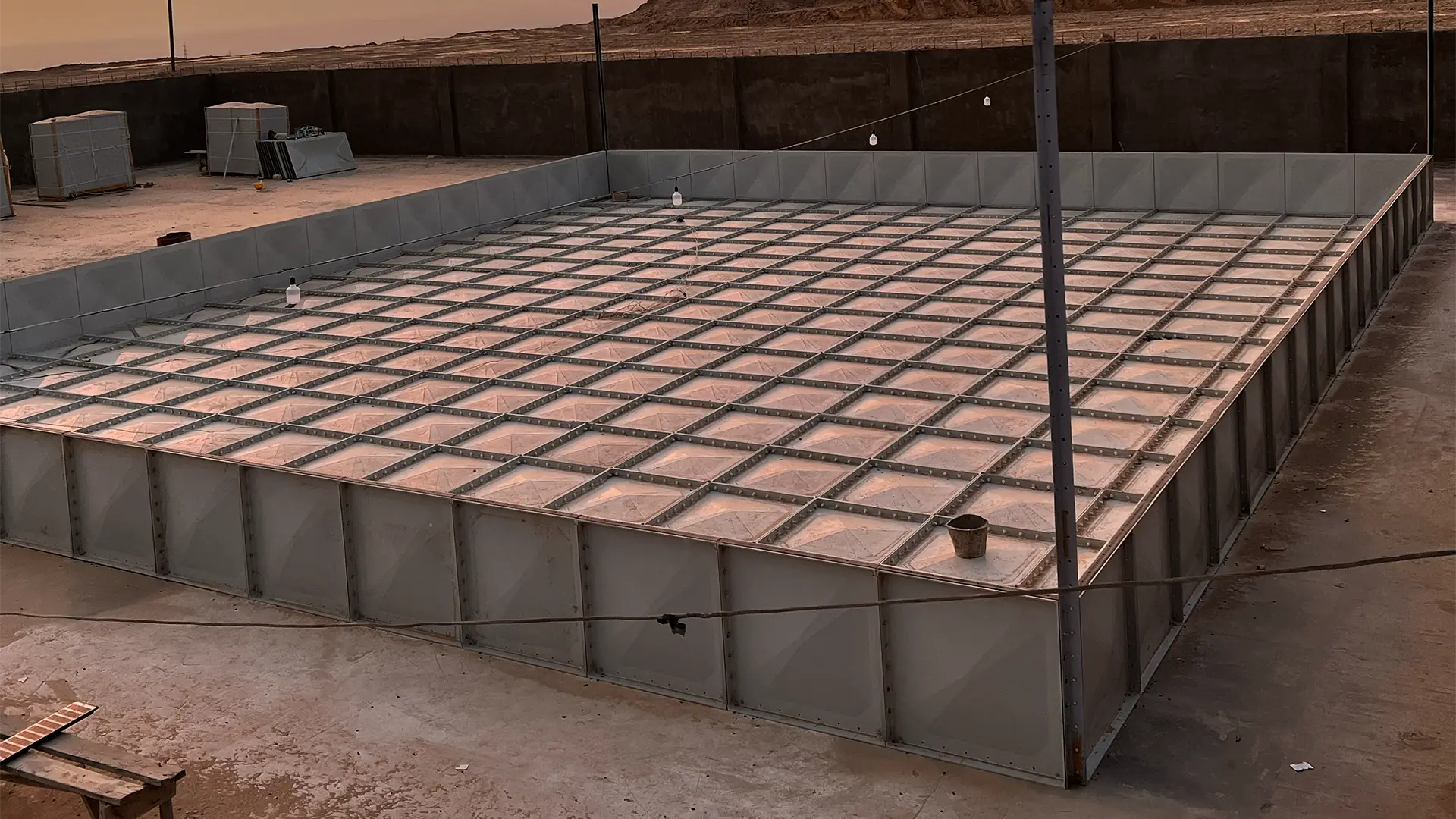
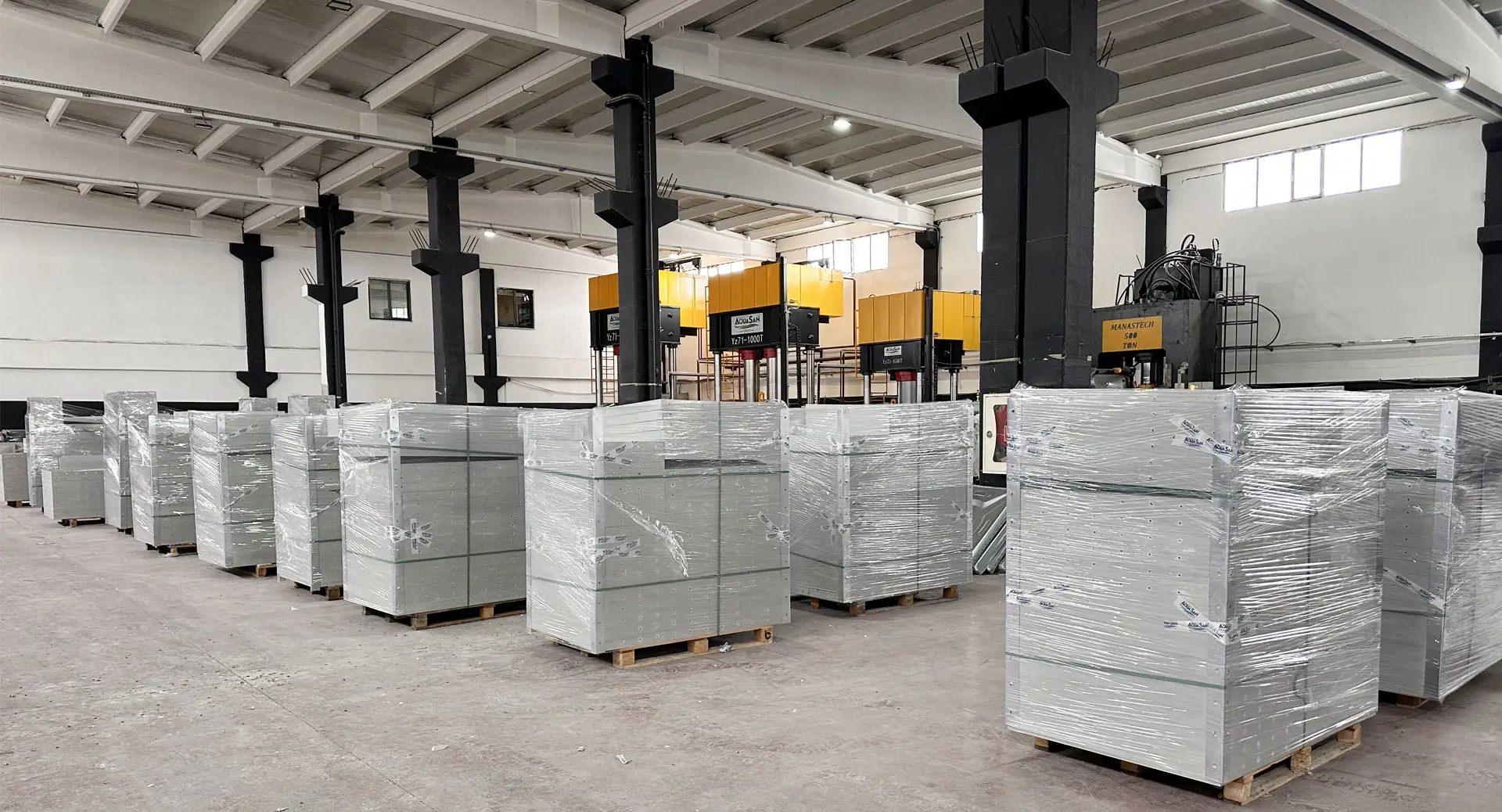
A sectional water tank, also called a modular or panel water tank, is built from standard factory-pressed panels that are bolted together on site, so the tank can be made to whatever size the project needs (see What is a sectional water tank?).
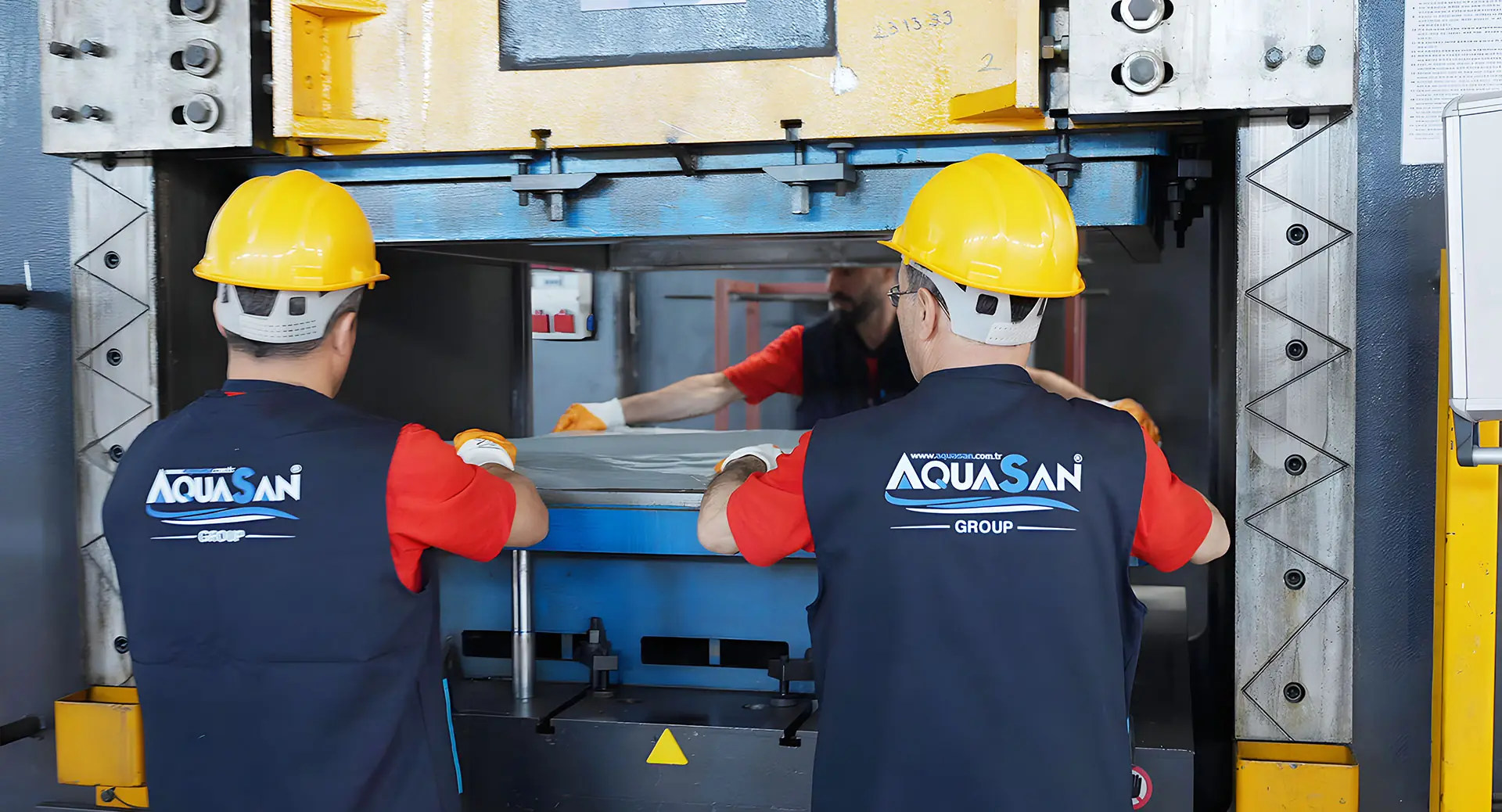
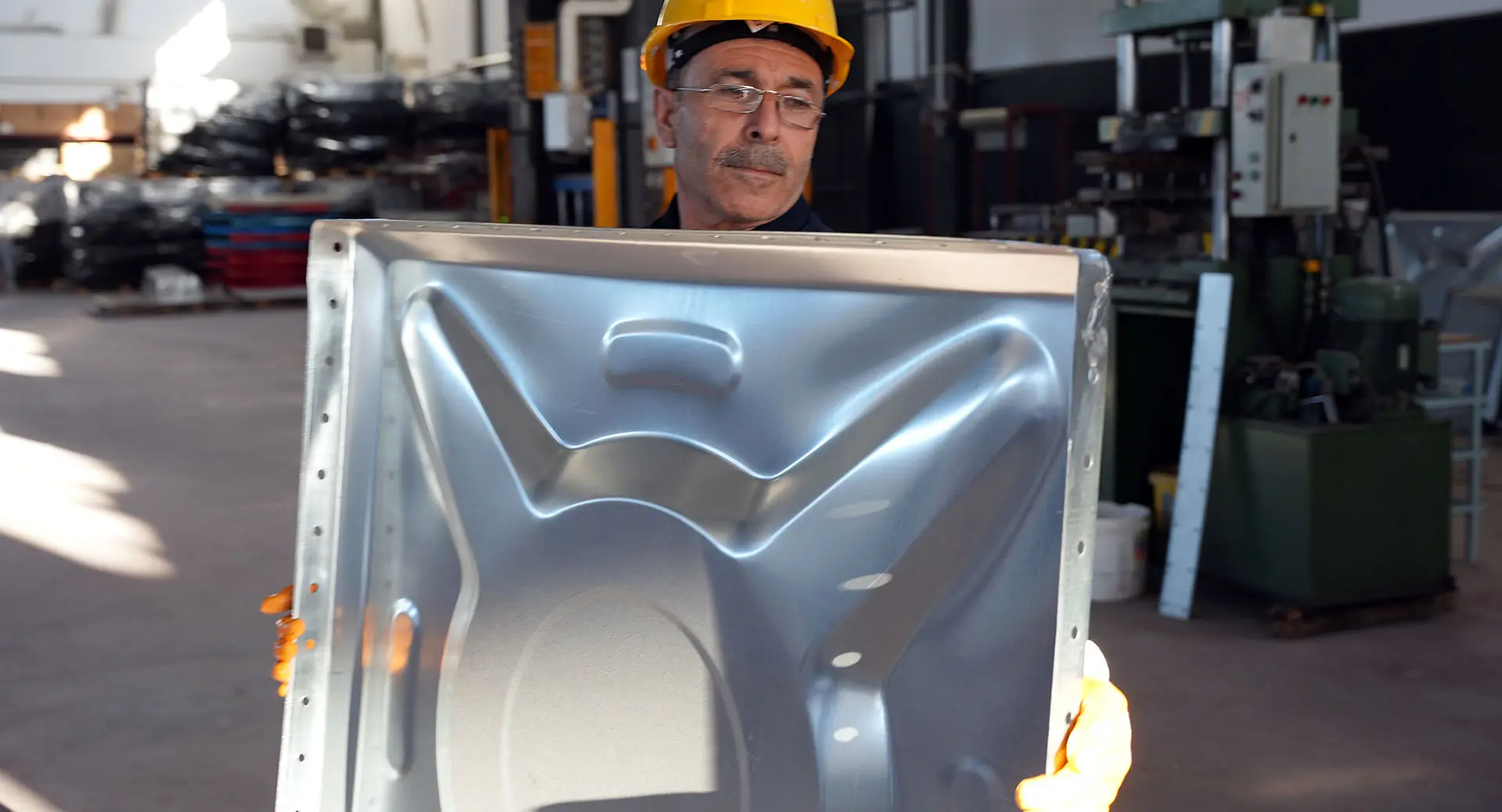
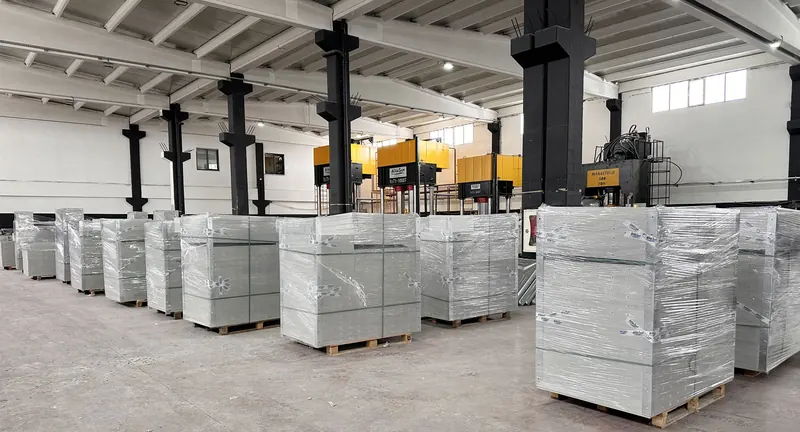
Aquatank panels come in three materials. GRP panels are cured in moulds heated to 150 °C on high-tonnage presses, while galvanized and stainless steel panels are cold-formed on high-pressure presses (2026 catalogue, pp. 5, 14); a tank built from such steel panels is commonly called a pressed steel tank. Because the tank arrives as a kit of panels rather than as a single vessel, it has clear practical advantages:
All three Aquatank models use the same bolted-panel principle; what sets them apart is the panel material, the panel size and where the tank will stand. Figures are taken from the 2026 product catalogue (pp. 4, 8, 16).
| Material | Panel size | Height range | Key feature | Typical use |
|---|---|---|---|---|
| GRP panel tank Glass fibre reinforced composite | 1,000 × 1,000 mm (half panel 1,000 × 500 mm) | 1.0–5.0 m in 0.5 m steps | Opaque, algae-free, UV resistant | Indoors or outdoors; insulated panels for very hot or cold climates |
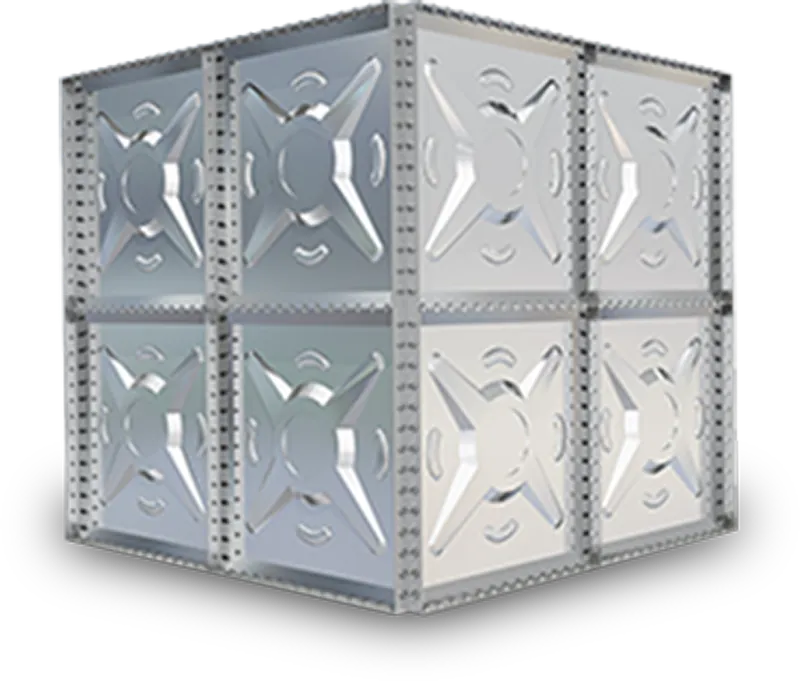
| Stainless steel AISI 304 / 316 L | 1,080 × 1,080 mm | 540–4,320 mm in 540 mm steps | Highest hygiene, corrosion resistance | Drinking and utility water where hygiene comes first |
| Galvanized steel ST 37 hot-dip galvanized sheet | 1,080 × 1,080 mm | 540–4,320 mm in 540 mm steps | High strength, economical solution | Non-potable storage such as fire water and process water |
GRP panels have a density of 1.8 kg/dm³, which the catalogue sums up as "a quarter of the weight of steel" (pp. 5, 8).
For a detailed comparison, see GRP vs stainless steel vs galvanized water tanks.
Three questions decide the material: where the tank will stand, what the water is for, and what the budget priority is.
For a tank exposed to sun and weather, GRP is the natural choice. The panels are UV resistant and opaque, so no algae forms inside the tank (p. 5). For very hot or very cold regions they can be insulated with 25 mm of polyurethane foam (pp. 5, 12). The catalogue states that the food-contact suitability of the GRP panels is documented by laboratory reports (pp. 6, 21).
Where the hygiene of drinking and utility water is the top priority, choose stainless steel. The catalogue describes it as offering the highest hygiene and corrosion resistance, and states that no algae or bacteria form in stainless steel tanks (pp. 4, 14). Panels are made from AISI 304 or 316 L stainless steel. For what else to look for in a potable water tank, see drinking water storage tanks.
Galvanized tanks are made from ST 37 hot-dip galvanized sheet and are presented as the high-strength, economical option (p. 4). They suit non-potable storage such as fire water or process water.
In the TSEK certificate shown in our catalogue, the galvanized tank is defined as a tank "not intended for drinking or domestic-use water" (p. 21). We therefore do not recommend galvanized tanks for drinking water; choose stainless steel or GRP instead. See the Certificates page for our documents.
The volume of a sectional tank is width × length × height, and 1 m³ holds 1,000 litres (about one tonne) of water, so a 10 m³ tank stores 10,000 litres.
Dimensions follow the panel module: 1,000 mm for GRP and 1,080 mm for galvanized and stainless steel. Height ranges are shown in the table above (pp. 8, 16).
Galvanized and stainless steel tanks have a standard range of 1.26–90 m³, and intermediate sizes and custom capacities are made to project requirements (pp. 15, 16). Examples from the catalogue:
| Capacity | Litres | Size (W × L × H) |
|---|---|---|
| 1.26 m³ | 1,260 | 108 × 108 × 108 cm |
| 5 m³ | 5,000 | 216 × 216 × 108 cm |
| 10 m³ | 10,000 | 216 × 216 × 216 cm |
| 20 m³ | 20,000 | 432 × 216 × 216 cm |
| 50 m³ | 50,000 | 540 × 432 × 216 cm |
| 90 m³ | 90,000 | 648 × 432 × 324 cm |
GRP tank capacity is calculated from the layout. Plan dimensions follow the 1 m panel module; confirm intermediate sizes for your project (catalogue pp. 11, 13). For the full size tables, see sectional water tank sizes; to work out the volume you need, see water tank sizing.
When measuring the room, allow for access around the tank: keep at least 500 mm between the tank and any wall or column, and between the tank roof and the ceiling (pp. 9, 16). The required volume itself comes from the building's plumbing or fire protection design; send us that figure with the room dimensions and we will work out a size that fits.
Sectional tanks store drinking, utility, fire and process water (p. 23). Applications listed in the catalogue include housing and residential complexes, hospitals, schools and dormitories, public buildings, industrial facilities, agriculture and irrigation, livestock farming and construction sites (p. 4).
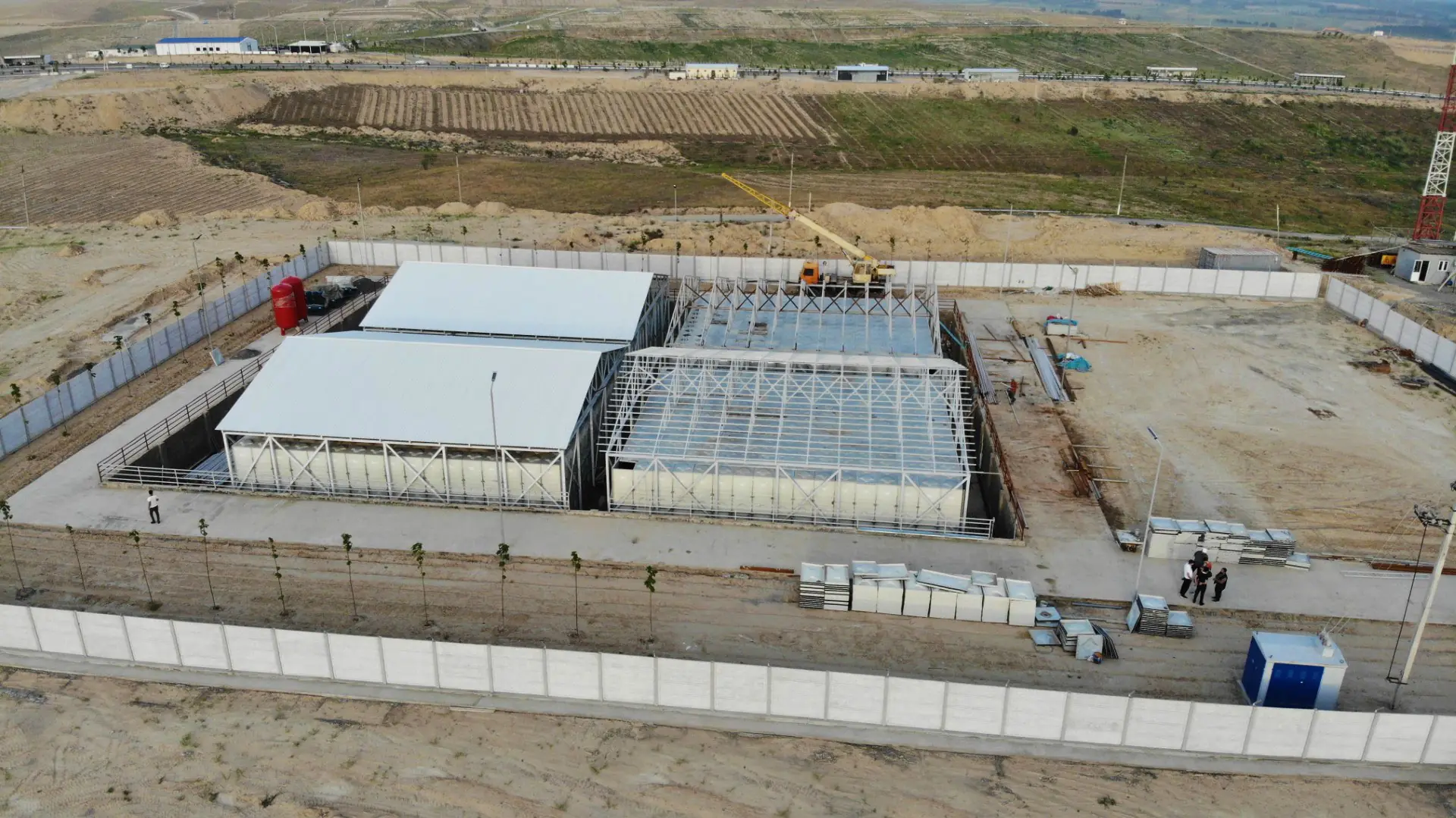
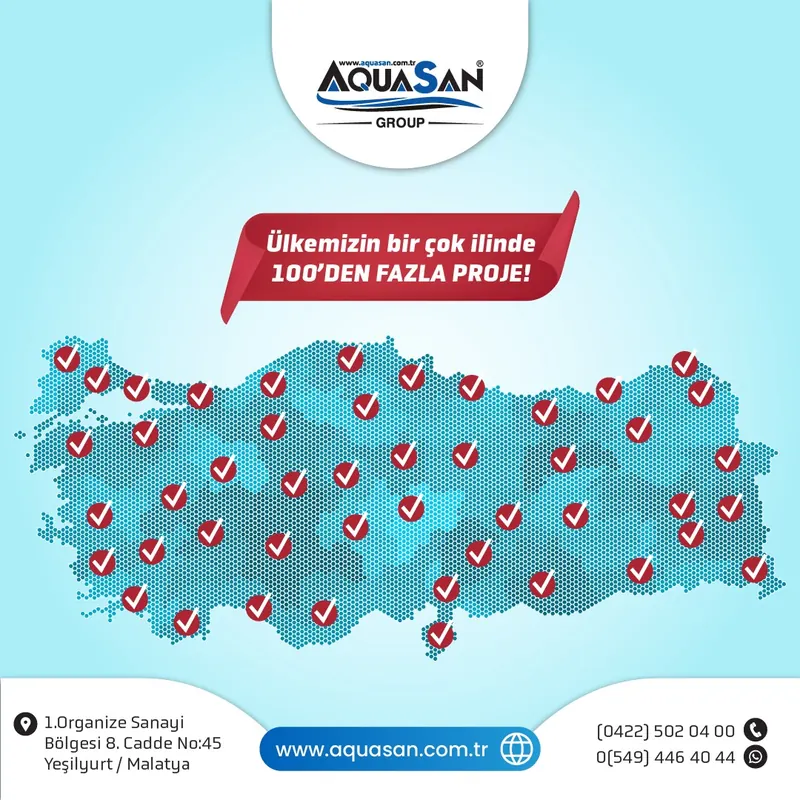
Aquasan tanks have been used in projects such as Ahal City in Ashgabat (Turkmenistan), Dr. Dakheel Hospital in Erbil (Iraq), the New Andijan City Project (Uzbekistan), Zerdabi Residence (Azerbaijan) and a 548-unit urban renewal project by TOKI (Turkey's Housing Development Administration) in Ankara (p. 19). Aquasan lists 55+ reference countries and 10,000+ completed projects (pp. 2–3). See our Projects page.
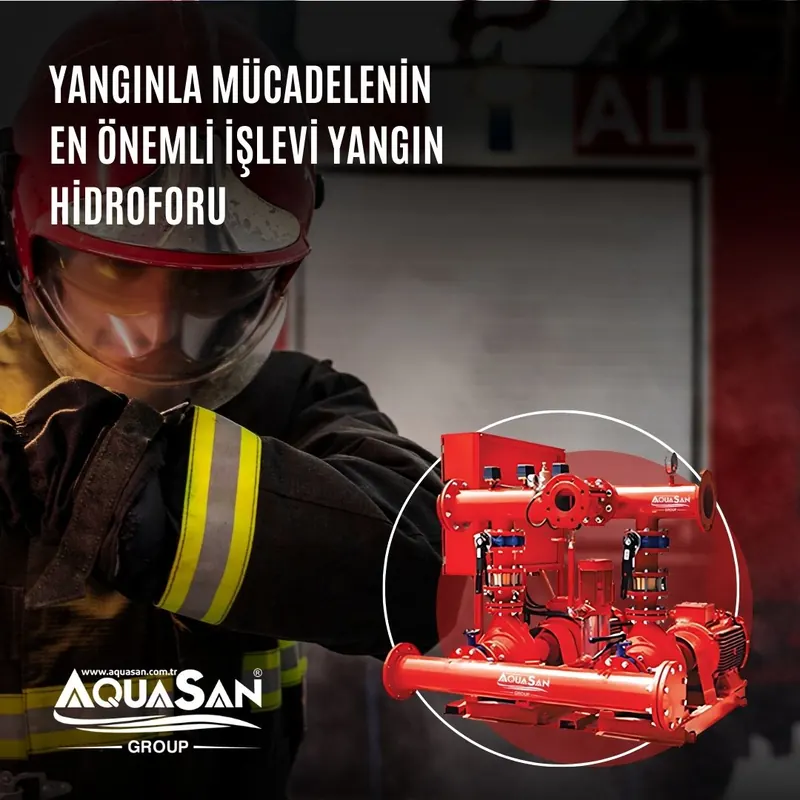
A fire water tank can be planned together with the fire booster sets made in the same plant, as one project with one point of contact (p. 22).
Aquatank tanks sit on a steel support grid on a concrete base (p. 9). The key site requirements are:
Our own installation teams assemble and test each tank on site, in Turkey and abroad (p. 18). Base drawings and connection sizes are on pages 8–13 of the catalogue; for step-by-step guidance, see our sectional water tank installation guide.
There is no fixed price list for sectional tanks: the price follows the size and conditions of each project. The main factors are:
For all eight factors in detail, see sectional water tank price.
To prepare the right tank size, layout and price for your project, we need eight details (p. 23):
Send them through our quote form. Not sure which material you need? Tell us the purpose and the location, and we will help you choose.
No. All three names describe the same kind of tank: standard factory-pressed panels bolted together on site. When the panels are pressed steel, the same design is also called a pressed steel tank. Because it arrives as a kit of panels, it can be carried through narrow doorways and assembled in place (p. 4).
It depends on the site and the use. GRP suits outdoor sites and extreme climates because the panels are UV resistant, opaque and can be insulated. Stainless steel is the choice where hygiene comes first. Galvanized steel is an economical option for non-potable water such as fire water (pp. 4, 5, 21). For a side-by-side comparison, see GRP vs stainless steel vs galvanized water tanks.
Yes. In a GRP tank, a partition panel divides the tank into two compartments, and both of its faces are made for water contact (p. 11). Because separate tanks need a 1 m maintenance gap between them, a partitioned tank stores more water on the same footprint: two separate 2 × 1.5 × 2 m tanks hold 12 m³ in total, while a single 2 × 4 × 2 m partitioned tank holds 16 m³ (p. 13).
Yes. Our own installation teams carry out site work across Turkey and abroad, and the catalogue describes a worldwide installation and service network (p. 18). Because the tank is delivered as panels and bolted together on site, it can be assembled in place at the destination (p. 4). Catalogue references include projects in Turkmenistan, Iraq, Uzbekistan and Azerbaijan (p. 19).
Aquatank sectional tanks come with a 2-year product warranty (pp. 3, 18). On the service side, panels, gaskets and fasteners are supplied from stock, and faults and leaks are dealt with promptly (p. 18). Ask us about the warranty scope and terms when you request a quote.

Plan an online meeting with our experts to learn about modular water storage technologies and get a project and price quote.
Get a Quote!